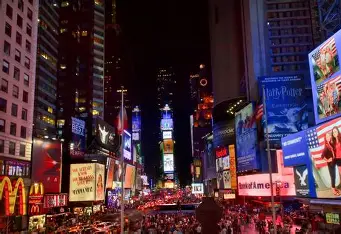
New York City is often referred to as “the city that never sleeps” due to its vibrant, 24-hour activity. This nickname reflects the city’s relentless energy, with businesses, entertainment, and transportation operating around the clock. The 24/7 subway system and numerous late-night venues contribute to its reputation as a place of non-stop action and excitement.
In many “24-hour” cities, plenty of eateries are open until 3 am, some clubs are open until 6 am,[4] and bars close at 2 am[5] or a few hours later.
Due to the COVID-19 pandemic, many 24-hour and late-night establishments began closing earlier. Coffee shops in lower Manhattan, in particular, began to close at 9:30 pm, whereas before the pandemic they had frequently closed at 12:30 am.[36]
The people who make use of these facilities, studies have found, are nevertheless affected by sunrise and sunset.[37][38] In other words: “that most humans aren’t as influenced by Earth’s light-dark cycle as we used to be” is not fully supported; there is an observed annual shift for “a stretch of three or four months” and “then, the process reversed direction
New York City is often referred to as “the city that never sleeps” due to its vibrant, 24-hour activity. This nickname reflects the city’s relentless energy, with businesses, entertainment, and transportation operating around the clock. The 24/7 subway system and numerous late-night venues contribute to its reputation as a place of non-stop action and excitement.
In many “24-hour” cities, plenty of eateries are open until 3 am, some clubs are open until 6 am,[4] and bars close at 2 am[5] or a few hours later.
Due to the COVID-19 pandemic, many 24-hour and late-night establishments began closing earlier. Coffee shops in lower Manhattan, in particular, began to close at 9:30 pm, whereas before the pandemic they had frequently closed at 12:30 am.[36]
The people who make use of these facilities, studies have found, are nevertheless affected by sunrise and sunset.[37][38] In other words: “that most humans aren’t as influenced by Earth’s light-dark cycle as we used to be” is not fully supported; there is an observed annual shift for “a stretch of three or four months” and “then, the process reversed direction