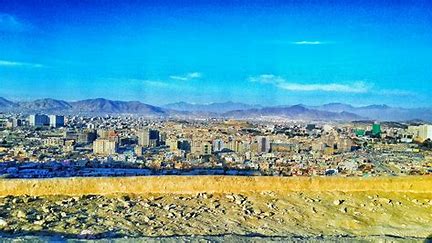
Herāt is an oasis city and the third-largest city in Afghanistan.[5] In 2020, it had an estimated population of 574,276, and serves as the capital of Herat Province, situated south of the Paropamisus Mountains (Selseleh-ye Safēd Kōh) in the fertile valley of the Hari River in the western part of the country. An ancient civilization on the Silk Road between West Asia, Central Asia, and South Asia,[6] it serves as a regional hub in the country’s west.
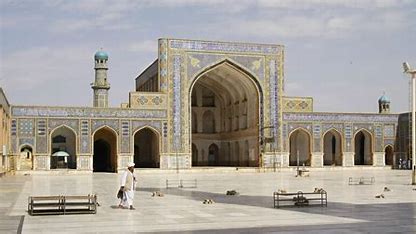
Herat dates back to Avestan times and was traditionally known for its wine. The city has a number of historic sites, including the Herat Citadel and the Musalla Complex. During the Middle Ages, Herat became one of the important cities of Khorasan, as it was known as the Pearl of Khorasan.[7] After its conquest by Tamerlane, the city became an important center of intellectual and artistic life in the Islamic world.[8] Under the rule of Shah Rukh, the city served as the focal point of the Timurid Renaissance, whose glory is thought to have matched Florence of the Italian Renaissance as the center of a cultural rebirth.[9][10] After the fall of the Timurid Empire, Herat has been governed by various Afghan rulers since the early 18th century.[11] In 1716, the Abdali Afghans inhabiting the city revolted and formed their own Sultanate, the Sadozai Sultanate of Herat. They were conquered by the Afsharid Persia in 1732.